 Referrals
 Patient Forms




Waking with a tired jaw or hearing that you grind your teeth at night can raise a simple question: why is this happening? Nighttime teeth grinding, also called sleep bruxism, can have several contributing factors. Sleep apnea may be part of the picture for some people, especially when grinding happens with snoring, breathing pauses, poor sleep, or daytime fatigue.
At our Westchester TMJ and sleep practice, we look beyond one symptom. Teeth grinding alone does not diagnose obstructive sleep apnea, but it can be a reason to pay closer attention to how you sleep and breathe.
Why Do I Grind My Teeth at Night?
Sleep bruxism is grinding, clenching, or jaw muscle activity that occurs during sleep. Some people make noticeable grinding sounds, while others discover the problem after waking with jaw fatigue or seeing signs of tooth wear.
Because nighttime grinding can occur for various reasons, the most useful next step is to consider the full pattern of symptoms rather than assume a single cause.
Possible signs include:
- Waking with a tired or tight jaw
- A partner hearing grinding sounds
- Morning jaw or facial soreness
- Nighttime clenching
- Changes in tooth surfaces
What Is the Connection Between Bruxism and Sleep Apnea?
Obstructive sleep apnea, or OSA, causes repeated narrowing or blockage of the airway during sleep. These breathing disruptions can trigger brief arousals as the body works to restore airflow.
Researchers have studied whether sleep bruxism and OSA are connected because both can occur around changes in sleep and arousal. Current evidence does not show a simple cause-and-effect relationship in which sleep apnea always causes teeth grinding. The two conditions may occur together in some patients.
Understanding sleep apnea starts with recognizing its symptoms, knowing how it is diagnosed, and learning why repeated breathing interruptions matter.
When Teeth Grinding May Be Worth a Sleep Apnea Screening
Grinding by itself does not tell us whether you have sleep apnea. It becomes more meaningful from a sleep perspective when other signs of disrupted breathing or poor-quality sleep are also present.
Watch for symptoms such as:
- Loud or frequent snoring
- Witnessed pauses in breathing
- Waking up gasping or choking
- Morning headaches
- Dry mouth on waking
- Restless sleep
- Daytime fatigue or sleepiness
- Trouble concentrating
Snoring is common in sleep-disordered breathing, although snoring alone does not confirm OSA. If snoring disrupts your sleep, exploring snoring treatment can help you understand your options.
Does Treating Sleep Apnea Stop Teeth Grinding?
Not necessarily. Treating diagnosed sleep apnea is important for breathing during sleep, but we should not assume that addressing OSA will automatically stop nighttime grinding.
A person may have more than one factor contributing to bruxism. If both conditions are present, each should be evaluated on its own. The goal is to understand the full picture rather than promise that one treatment will solve every symptom.
What if My Grinding Is Related to TMJ Instead?
Teeth grinding and jaw clenching can also occur alongside TMJ symptoms. Some people notice jaw pain, muscle tension, headaches, or changes in jaw movement.
Those concerns warrant their own evaluation, but this article focuses on whether nighttime grinding is accompanied by signs of sleep-disordered breathing. A patient can have TMJ concerns, sleep concerns, or both.
How Is Suspected Sleep Apnea Evaluated?
Symptoms can tell us that further evaluation may be worthwhile, but they cannot confirm sleep apnea. Screening is a first step, not a diagnosis.
We may begin by discussing snoring, breathing pauses, sleep quality, daytime symptoms, and other concerns. If the pattern suggests possible OSA, appropriate sleep testing and medical diagnosis can determine whether sleep apnea is present.
Dr. Wanda Mejia can then help patients understand whether dental sleep treatment may fit into the larger care plan.
How Dental Sleep Apnea Treatment May Help
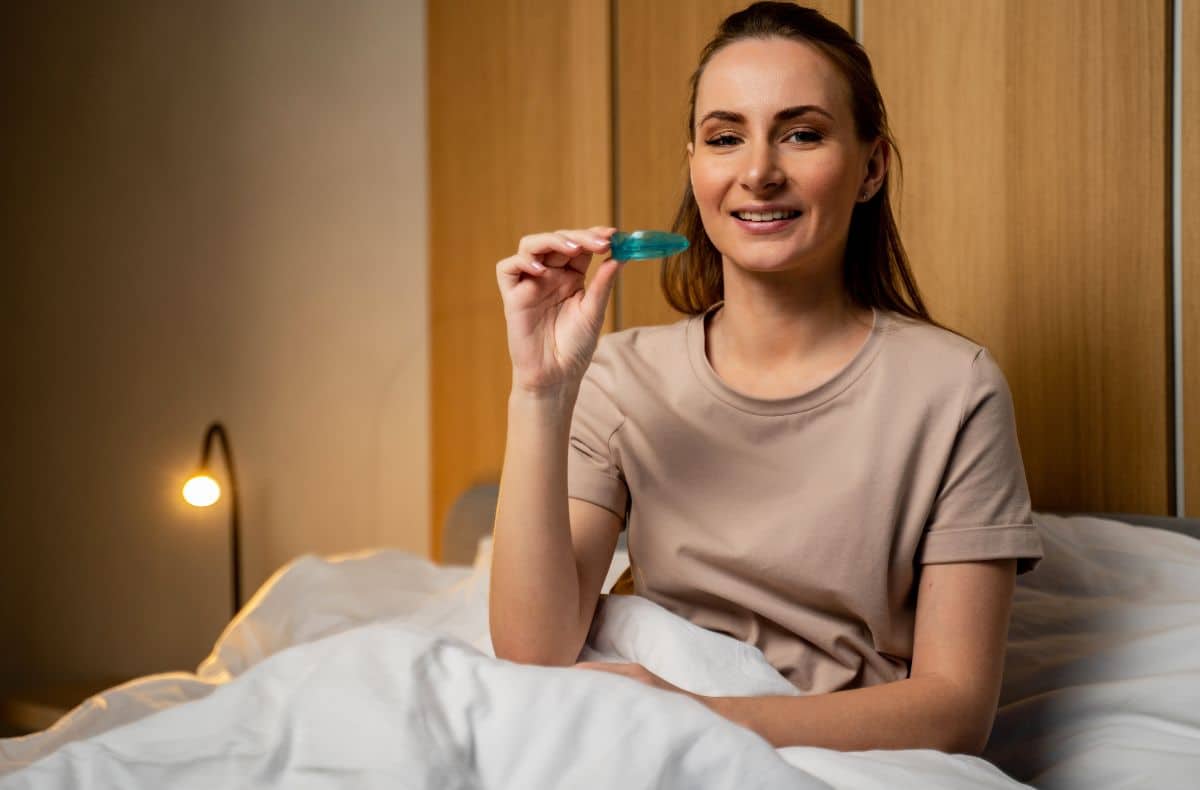
When obstructive sleep apnea has been properly diagnosed, some patients may qualify for a precision sleep appliance. These custom oral appliances are worn during sleep and designed to support the airway by changing the position of the lower jaw.
For appropriate patients, oral appliance therapy may provide an alternative to CPAP. Fit, adjustment, jaw comfort, and follow-up matter, so treatment should be planned for the individual rather than treated like a generic mouthguard.
Explore how sleep apnea treatment in Westchester County may include dental sleep care as part of an individualized OSA treatment plan.
Frequently Asked Questions
Teeth Grinding & Sleep Apnea FAQs
Teeth Grinding & Sleep Apnea
FAQs
Patients often notice grinding before they realize their sleep or breathing may deserve attention. These answers address common questions without assuming that bruxism automatically means sleep apnea.
Take the Sleep Apnea Assessment in Westchester County
If nighttime teeth grinding happens with snoring, poor sleep, morning headaches, breathing pauses, or daytime fatigue, it may be worth looking beyond the teeth. Our Sleep Apnea Assessment can help identify whether your symptoms suggest that further evaluation may be appropriate.
To discuss teeth grinding and sleep apnea with Westchester TMJ & Sleep in Mohegan Lake, call us at (914) 594-6854.